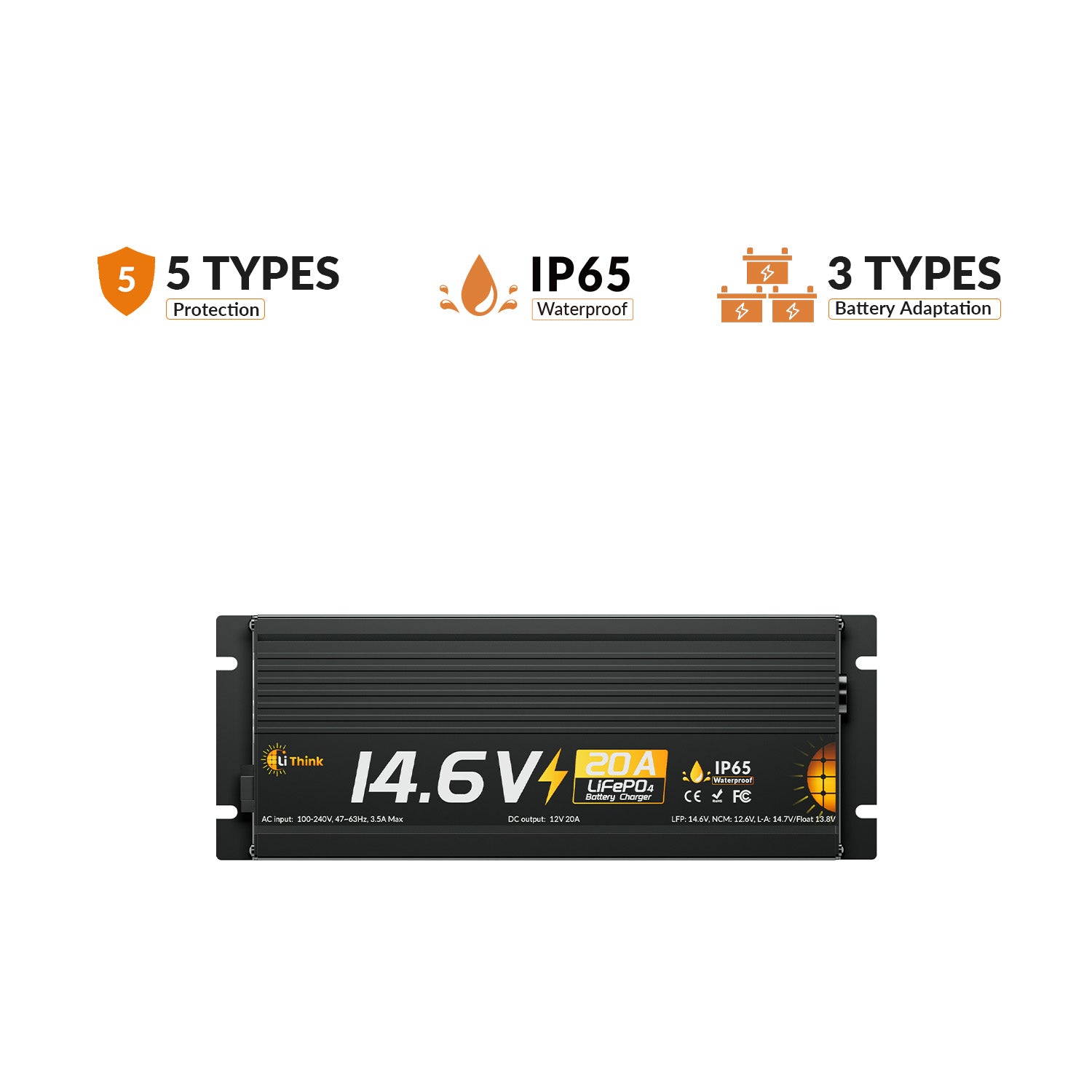
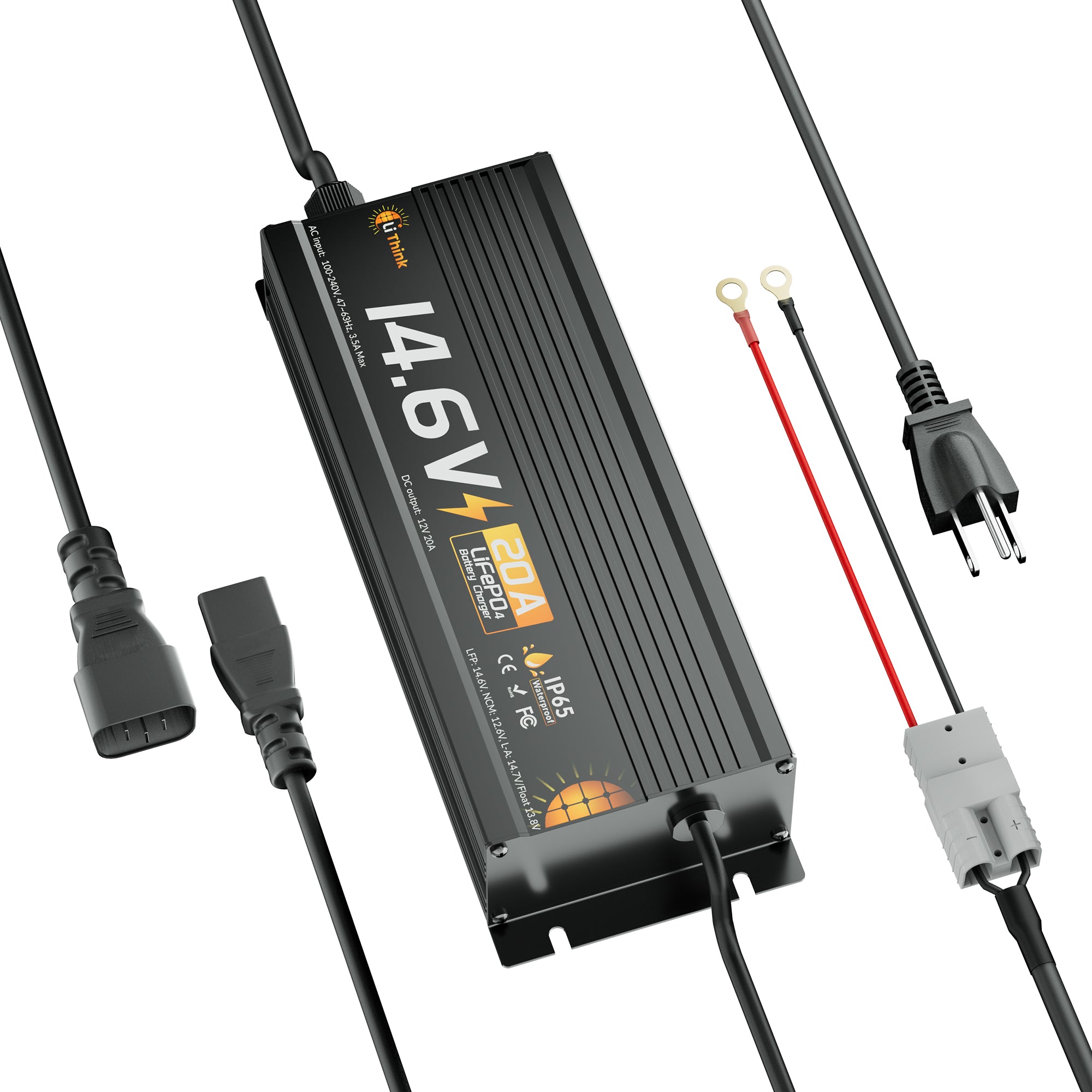
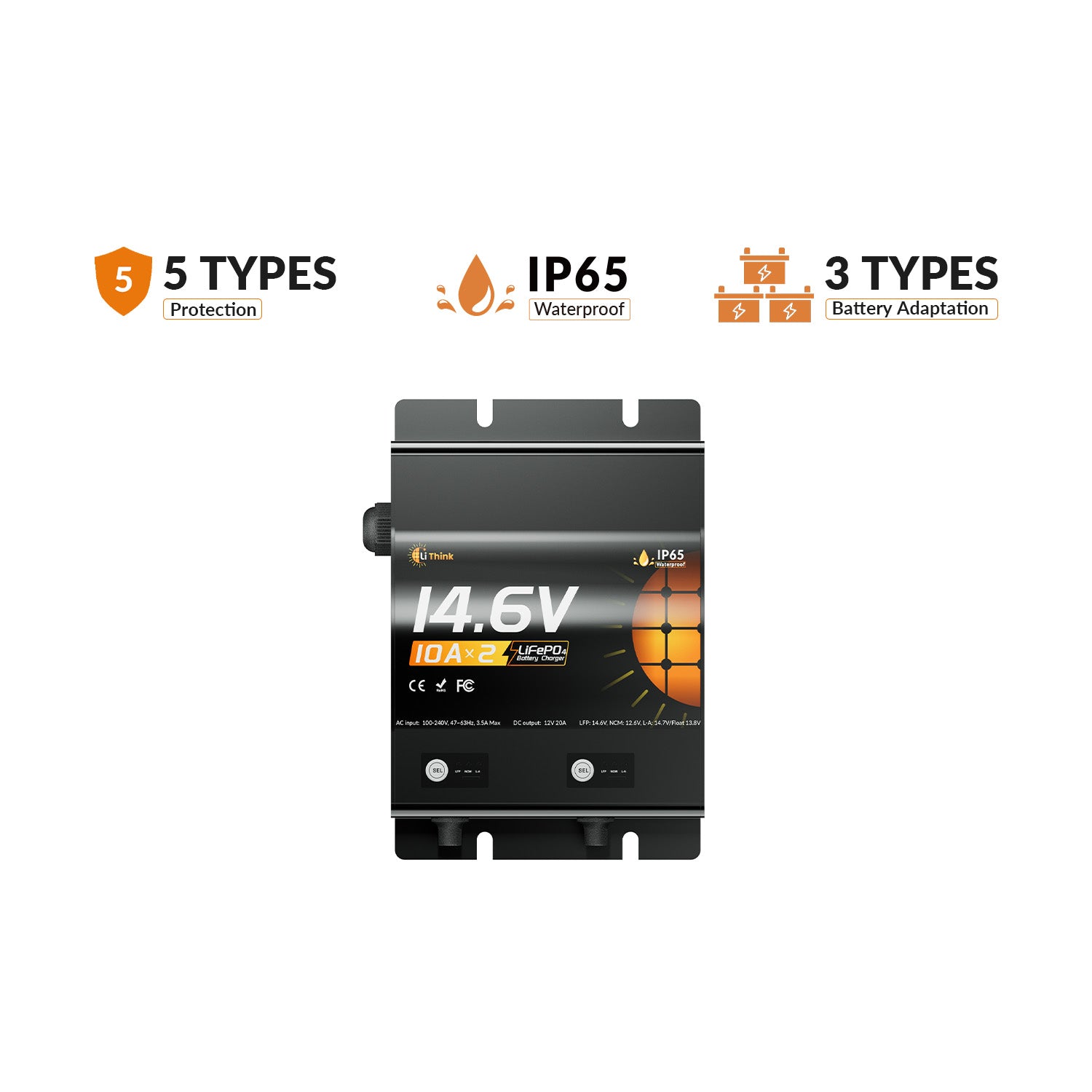
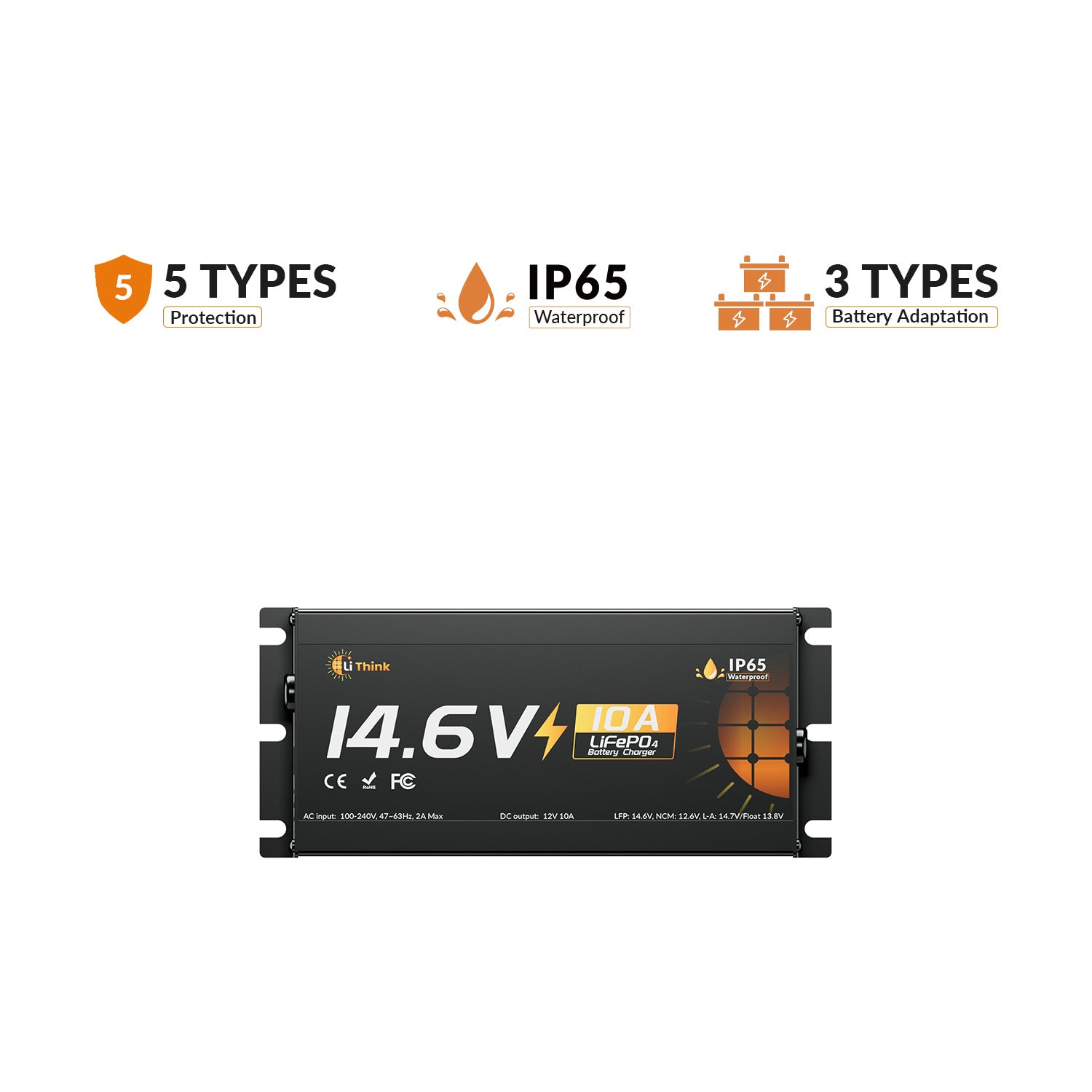
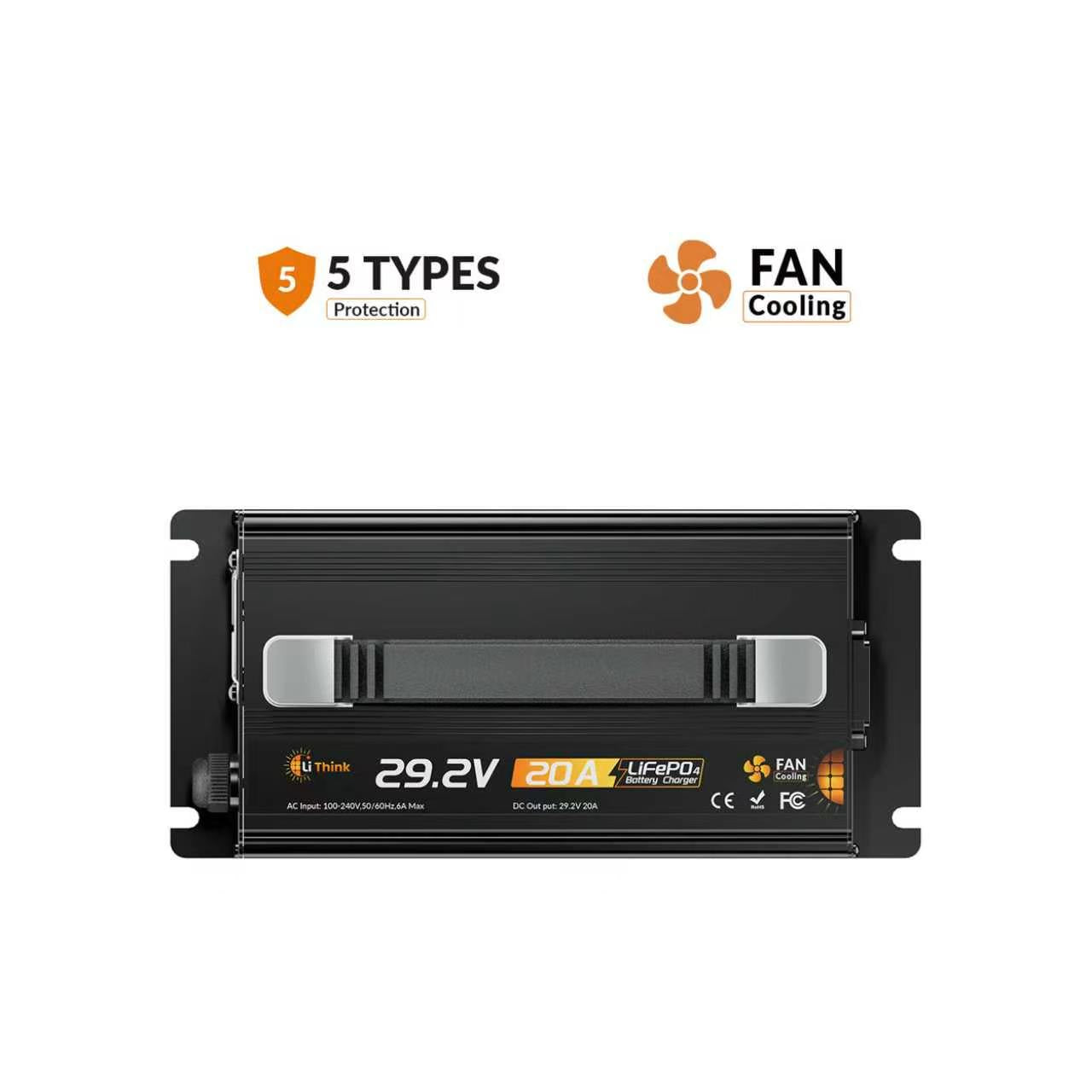
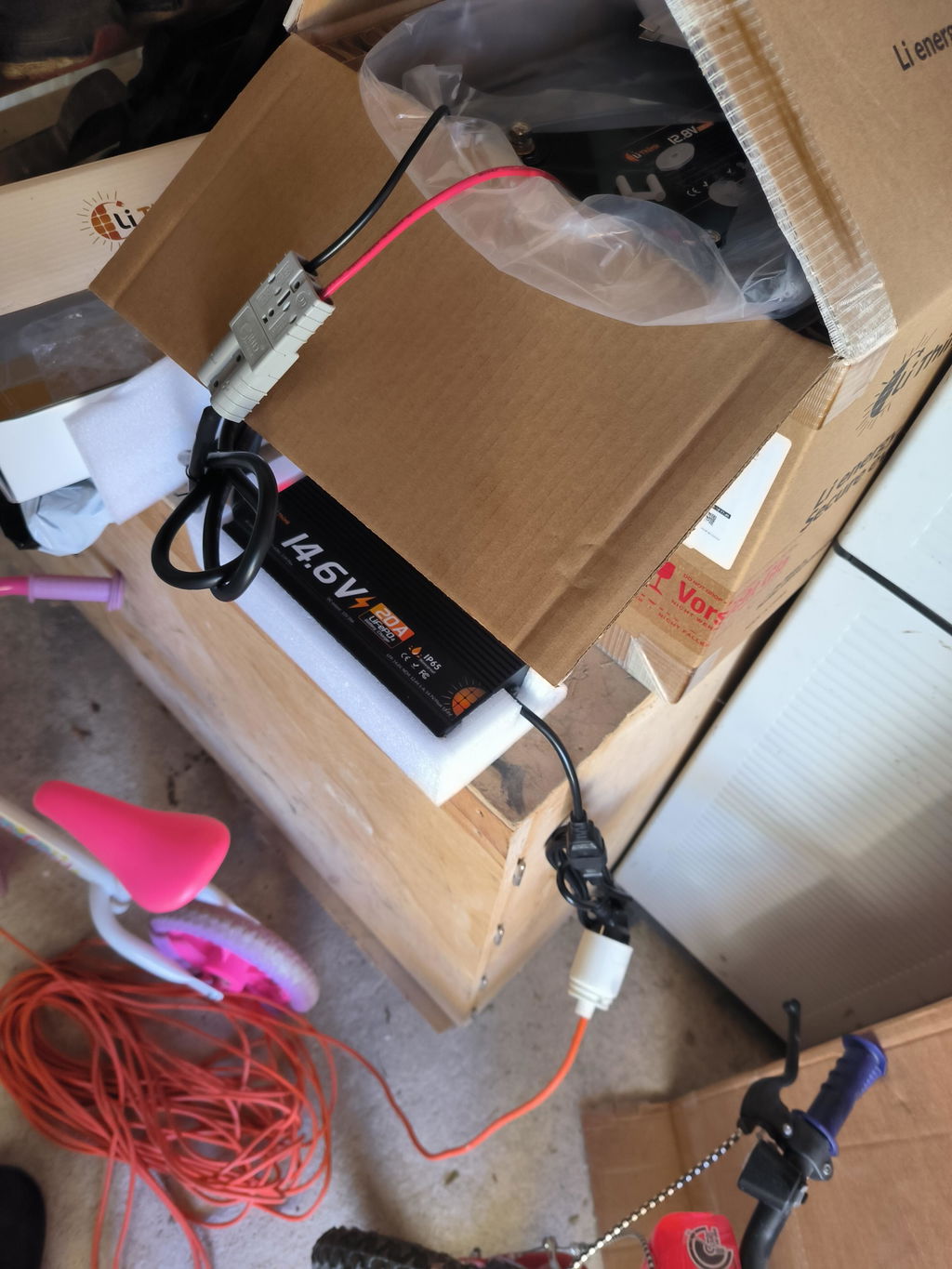
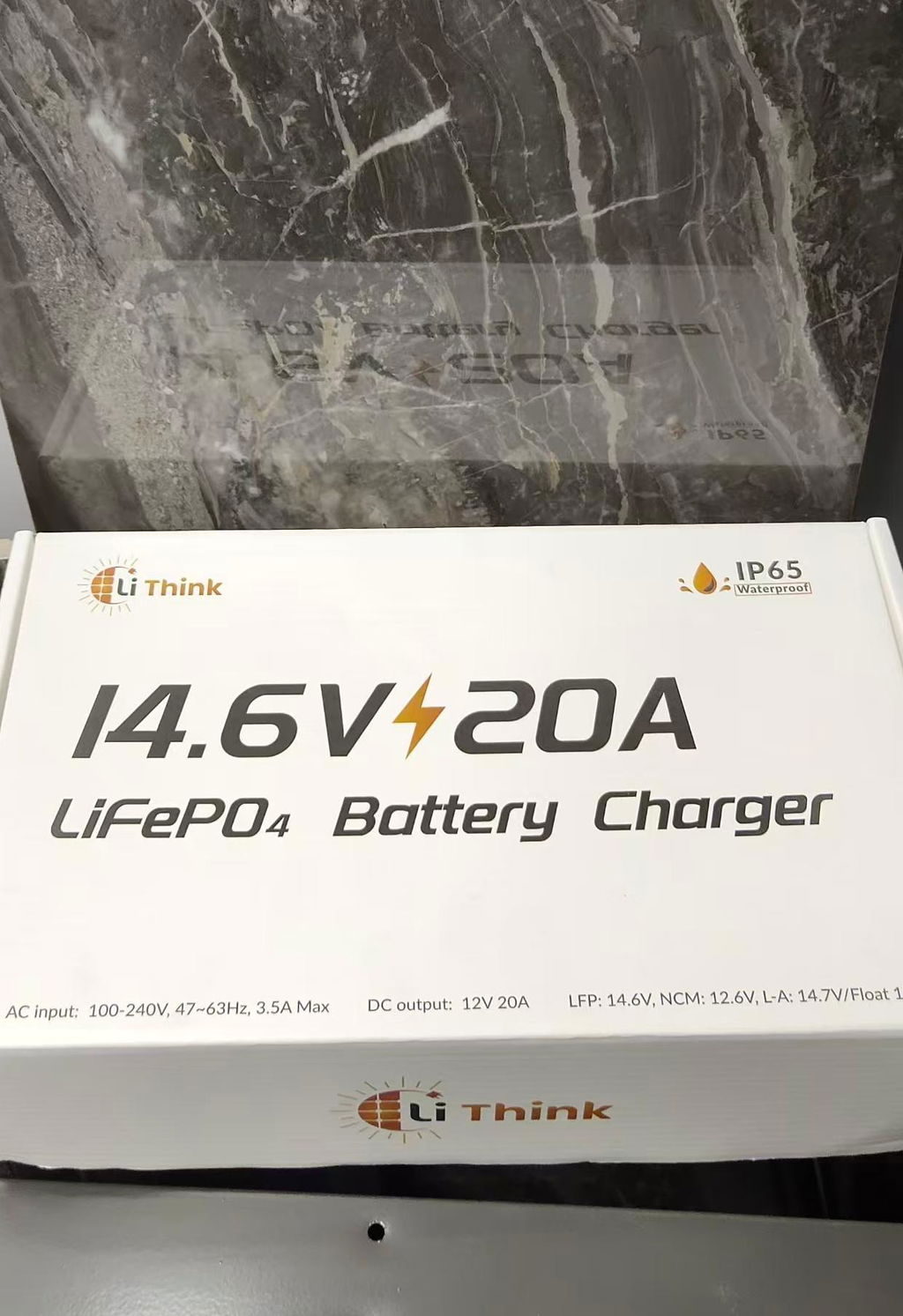
14.6V 20A Waterproof

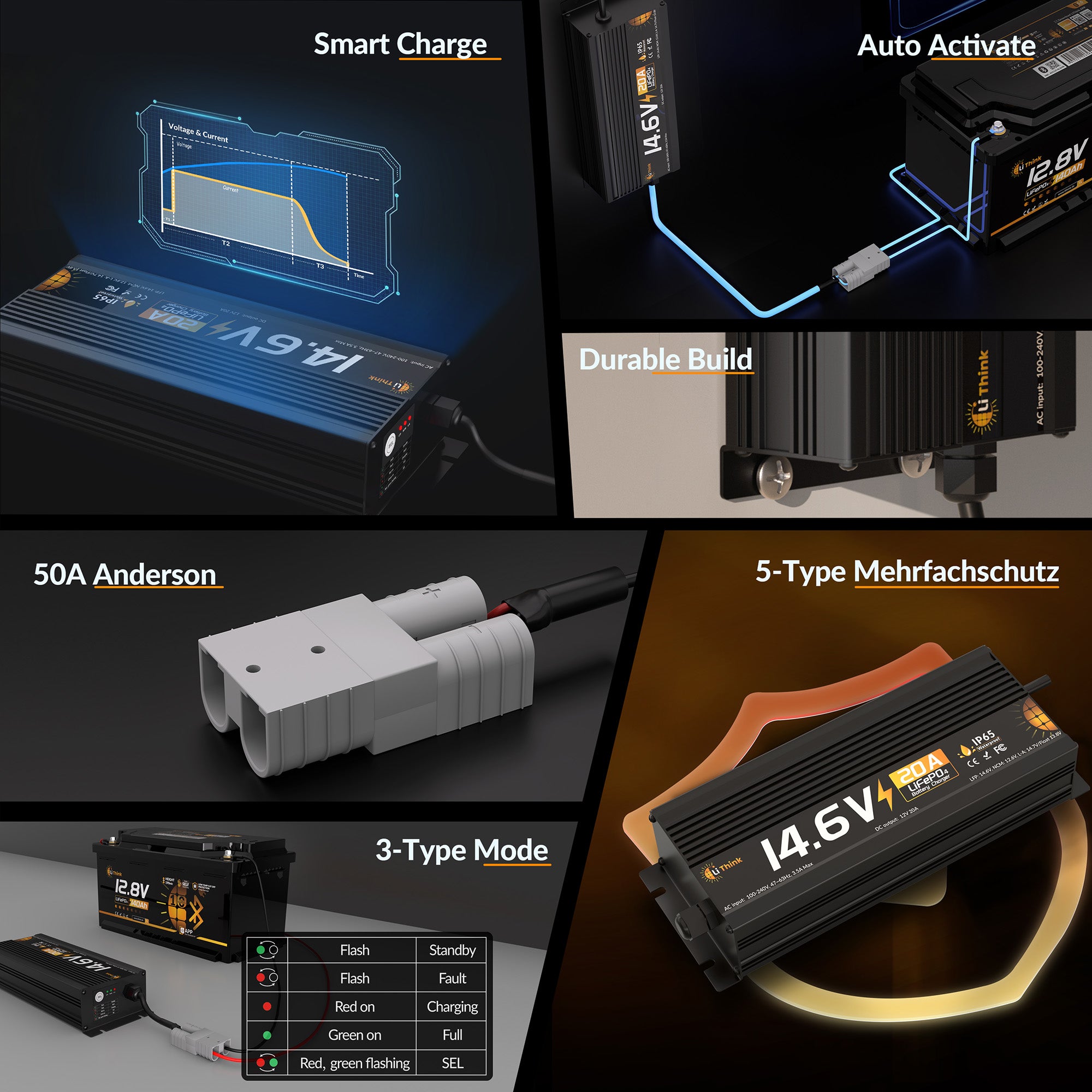
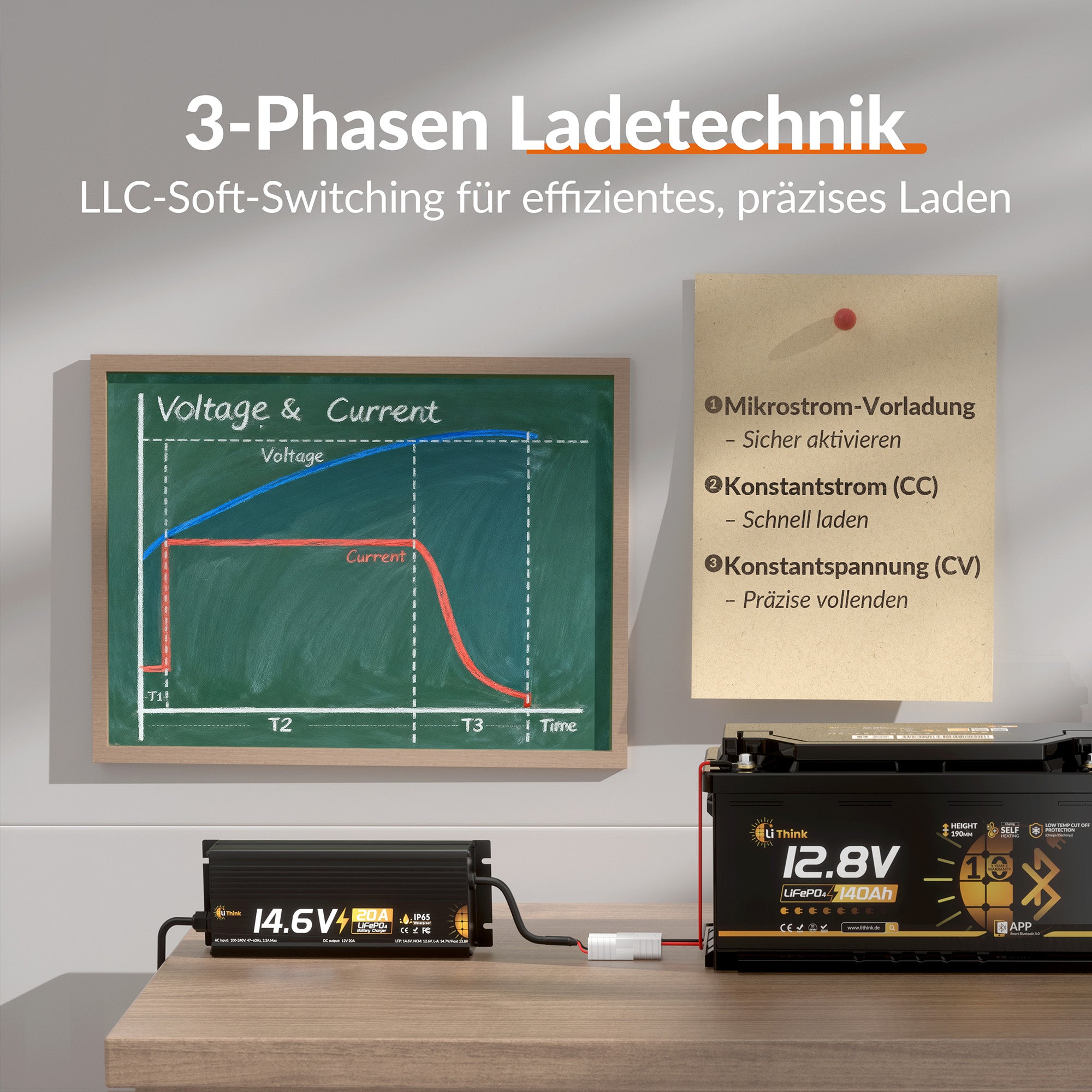
  • 0 V Activation

    Reactivates the BMS automatically.

  • CC Fast charging

    High-Speed charging up to 90%.

  • CV Saturation

    Stable 14.6 V for fully charged cells.

  • Car Shutdown

    Stops at 100% – no overcharging.

Industrial Safety Standard

Charge unattended. 100% safe.

A 5-fold protective shield monitors voltage and temperature at millisecond intervals. It acts like a firewall between the mains and the battery, so you can leave the room with peace of mind.

  • > 14,6 V

    Surge Protector
  • 20 A

    Overcurrent protection
  • Auto-Stop

    Short-circuit protection
  • + / -

    Reverse Polarity Protection
  • ≥ 75 °C

    Overheat protection

Future-Proof Investment

3 modes. 1 charger.

Why fill your workshop with multiple chargers? This device grows with your needs. Whether you're still using a classic AGM battery today and switch to LiFePO4 tomorrow — our 20A charger adapts at the push of a button. That saves space, money and protects the environment.

LiFePO₄ • 14,6 V

SLA / AGM • 14,7 V

NCM Li-Ion • 12.6 V

Built to last. Design meets function.

This charger was designed for tough everyday use. The housing made of a anodized aluminium alloy is not only a visual highlight but also acts as a massive heat sink. It is sealed to IP65 against water and dust – the ultimate all-in-one solution for your garage, your boat, or your motorhome.

Specifications & Scope of delivery

Collapsible row

Use collapsible tabs for more detailed information that will help customers make a purchasing decision.

Ex: Shipping and return policies, size guides, and other common questions.

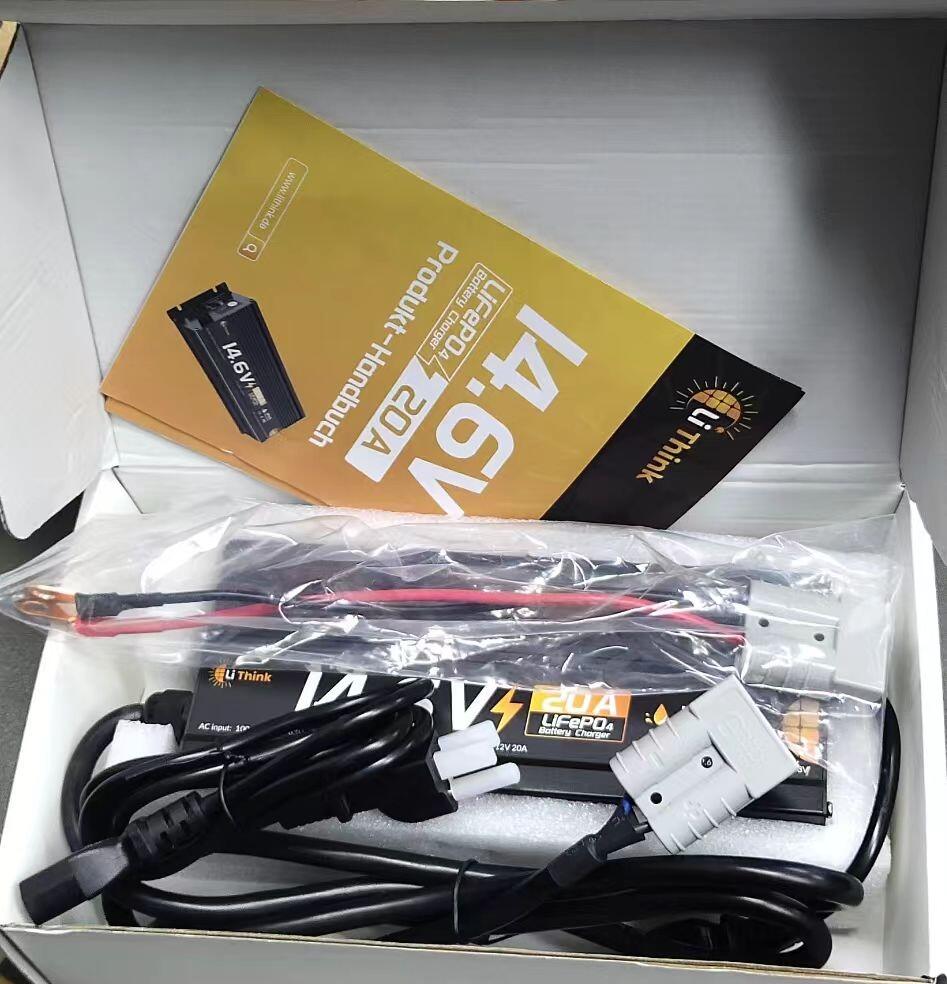
Included in the delivery

  • Waterproof

  • Manual (DE/EN)

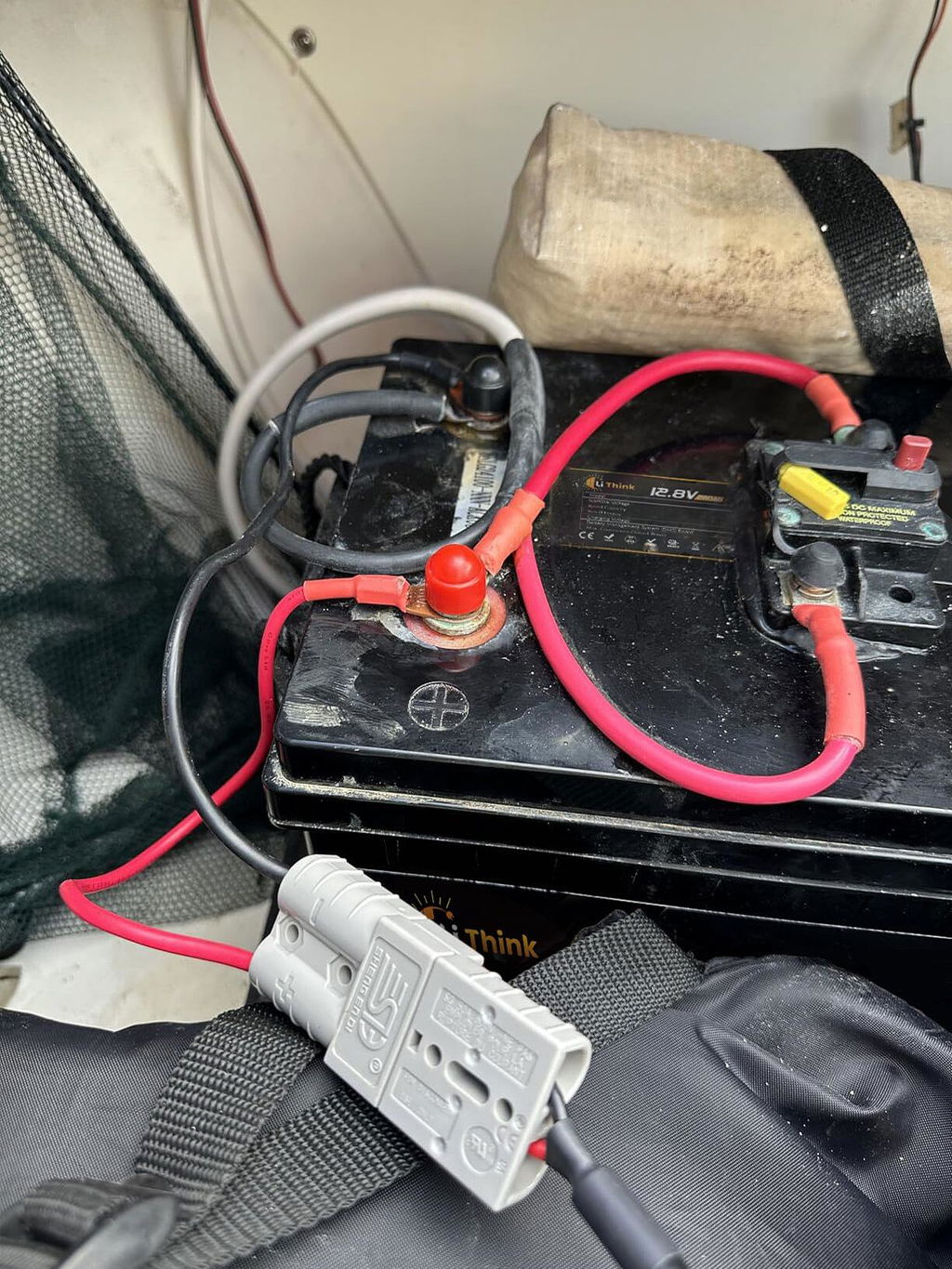
  • Anderson connector cable

FAQs

1. Which Lithink batteries is the 14.6V 20A charger suitable for, and for which capacities is it especially recommended?

The Lithink 14.6V 20A charger is designed for 12.8V lithium iron phosphate batteries and is compatible with all 12.8V models from Lithink – including larger capacities such as 100Ah, 150Ah, 200Ah, etc.. Compared to the 10A charger, the 20A version is particularly suitable for medium to large batteries (around 50Ah and up). For example, a Lithink 12.8V 100Ah battery can be fully charged in approximately 5 hours. Even larger batteries, such as 200Ah, are charged correspondingly faster (a 200Ah battery would be full in about 10 hours). In general, the 14.6V 20A charger efficiently charges all 12.8V LiFePO4 batteries from Lithink – it shows its speed advantage especially with batteries of roughly 50Ah capacity and above.

2. How long does it take to fully charge various Lithink battery capacities with the 14.6V 20A charger?

This 20A charger delivers twice the current of the 10A model, significantly reducing charging times. For example, it takes only about 2.5 hours to fully charge a Lithink 12.8V 50Ah battery, and roughly 5 hours for a 100Ah battery. A larger Lithink 12.8V 150Ah battery would be fully charged in around 7.5 hours, and a 200Ah battery in approximately 10 hours. Essentially, the 20A charger can charge about 20Ah into the battery per hour. Actual charging times may vary slightly depending on temperature and the battery BMS cutoff parameters, but overall the 14.6V 20A charger enables significantly faster charging of Lithink batteries at all capacities.

3. How safe is the 14,6V 20A charger and what protection features does it have?

The Lithink 14.6 V 20 A charger is based on the same safety concept as the 10 A model and has been reinforced for higher power. It features comprehensive protection functions such as overtemperature, short-circuit, overvoltage, and reverse-polarity protection that intervene in real time during charging. If the temperature rises too high, the device’s thermal management automatically reduces or pauses the current until it cools down. A robust, water- and dust-tight enclosure (some versions IP65) protects the electronics even under harsh conditions. Overall, this multi-layer protection ensures that the 20 A charger operates safely and reliably despite its high output — ideal for charging large LiFePO₄ batteries.

4. How can I tell with the 20A charger that the battery is full, and does it automatically shut off when charging is finished?

The 14.6V 20A charger also features an LED indicator that signals the charging status. As long as the battery is still charging (in constant current or constant voltage mode), the LED lights red; once the battery is fully charged, the indicator switches to green. Toward the end of the charging process the unit enters the constant voltage phase and the charging current gradually decreases. When the charger detects that the battery current has fallen to a very low value and the final charging voltage of 14.6V is present, the charging cycle ends and the output is turned off. A green LED therefore indicates that the battery is full and the charger has automatically stopped the current flow to prevent overcharging. You do not need to do anything else — the charger handles the entire process from charging to automatic shutdown on its own.

5. Can the 20A charger charge multiple batteries at the same time? Does this charger support charging batteries in parallel operation?

Although the 14,6V 20A charger supplies a higher charging current, it only has a single output – therefore it is recommended to charge only one 12.8V battery per charger. If you want to charge multiple batteries at the same time, using a Lithink dual charger or multiple chargers is more sensible. For charging two identical Lithink batteries in parallel simultaneously with this 20A unit: in principle it is possible, but requires caution. Two batteries connected in parallel behave like a single battery with double the capacity. The charger current of 20A is then distributed across both batteries (approximately 10A per battery), so the total time to fully charge both will be roughly the same as charging them sequentially. When charging batteries in parallel, ensure both batteries have the same voltage and type and that the connections are tight and secure to avoid imbalances or overcurrents. Also monitor the temperature of the batteries and the status of the charger during the charging process. In summary, the 20A charger itself does not have multiple outputs; charging multiple batteries at the same time requires a careful approach. The safest and most effective method is to allocate a dedicated charging port or a dedicated charger to each battery.