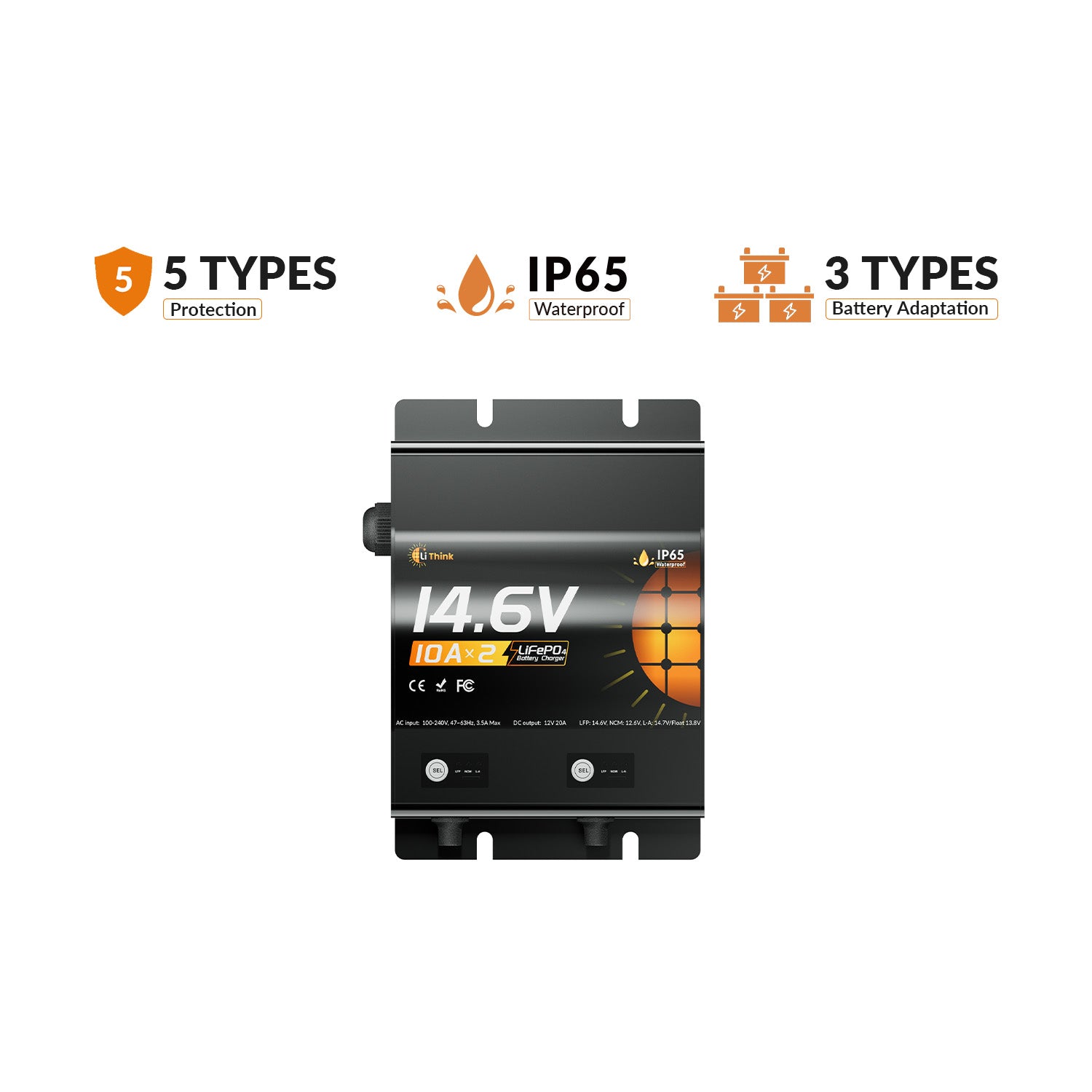
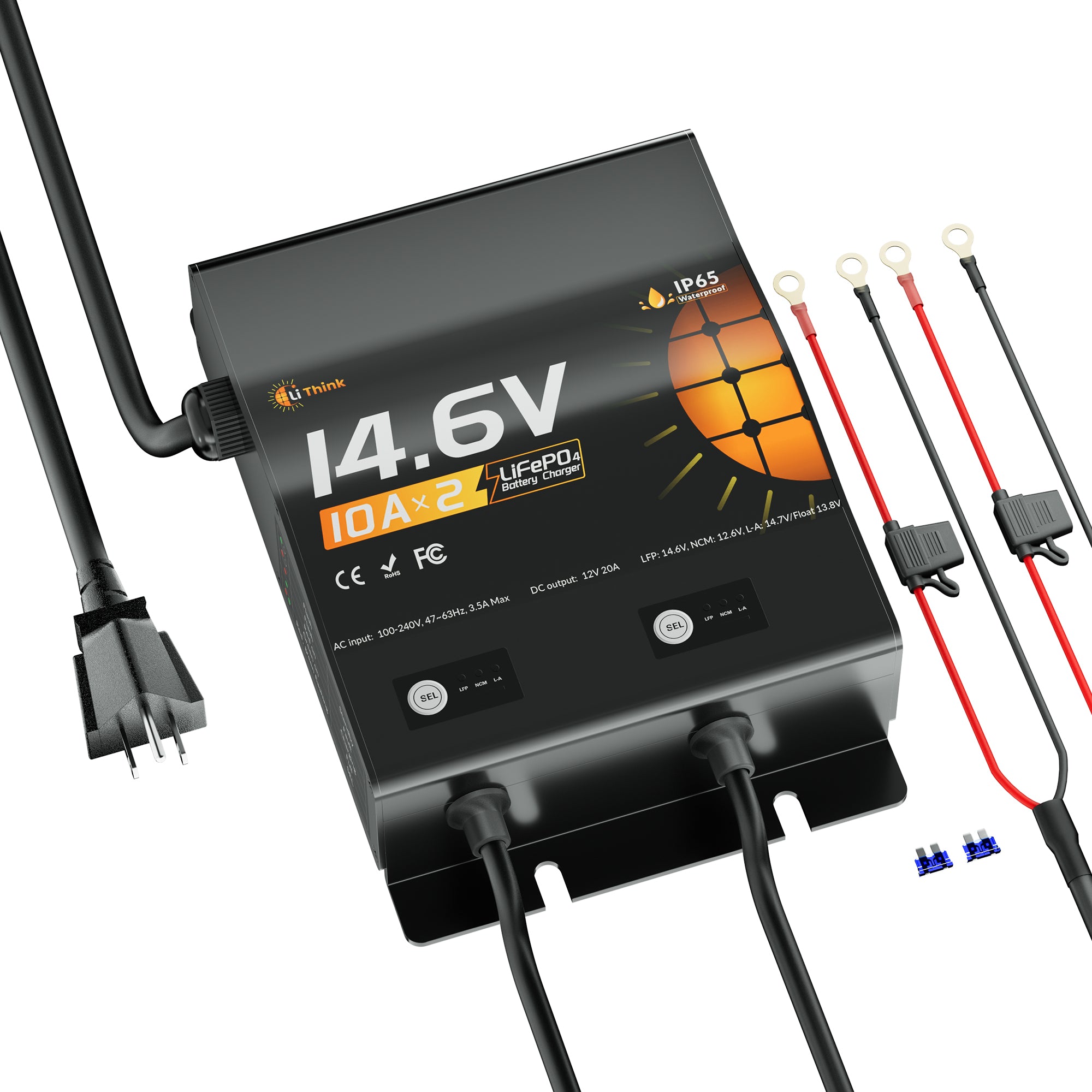
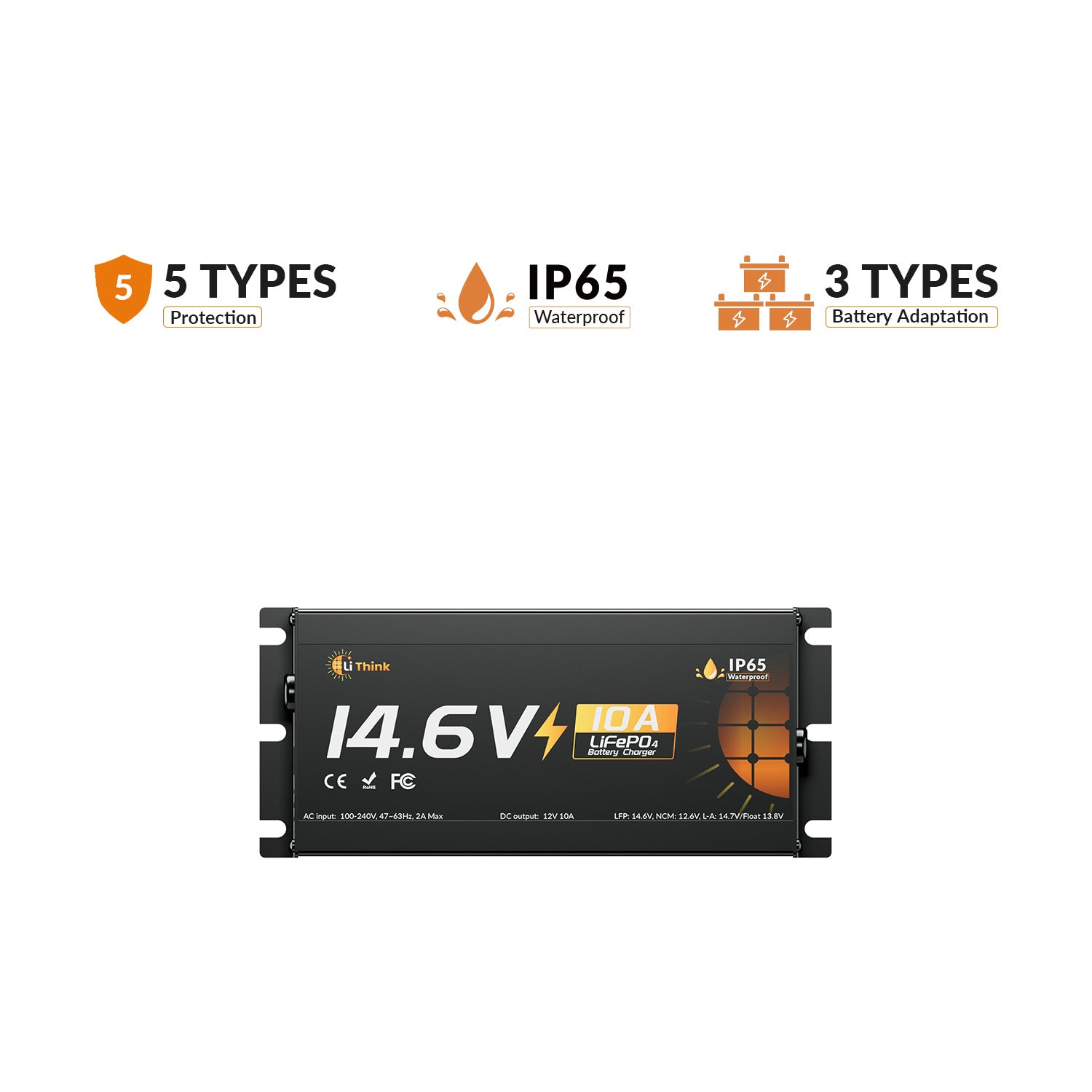
14.6V 10A 2-Bank Waterproof

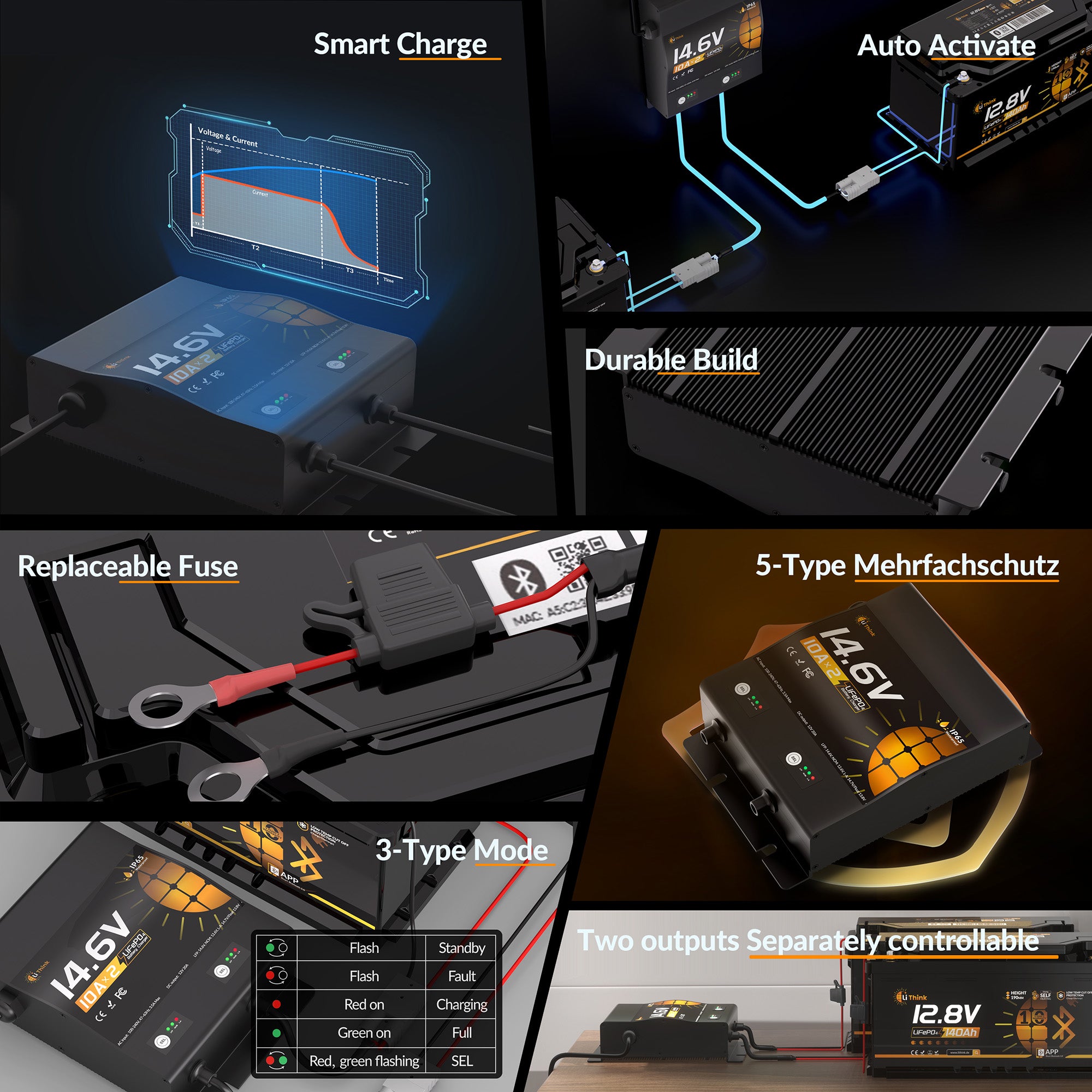
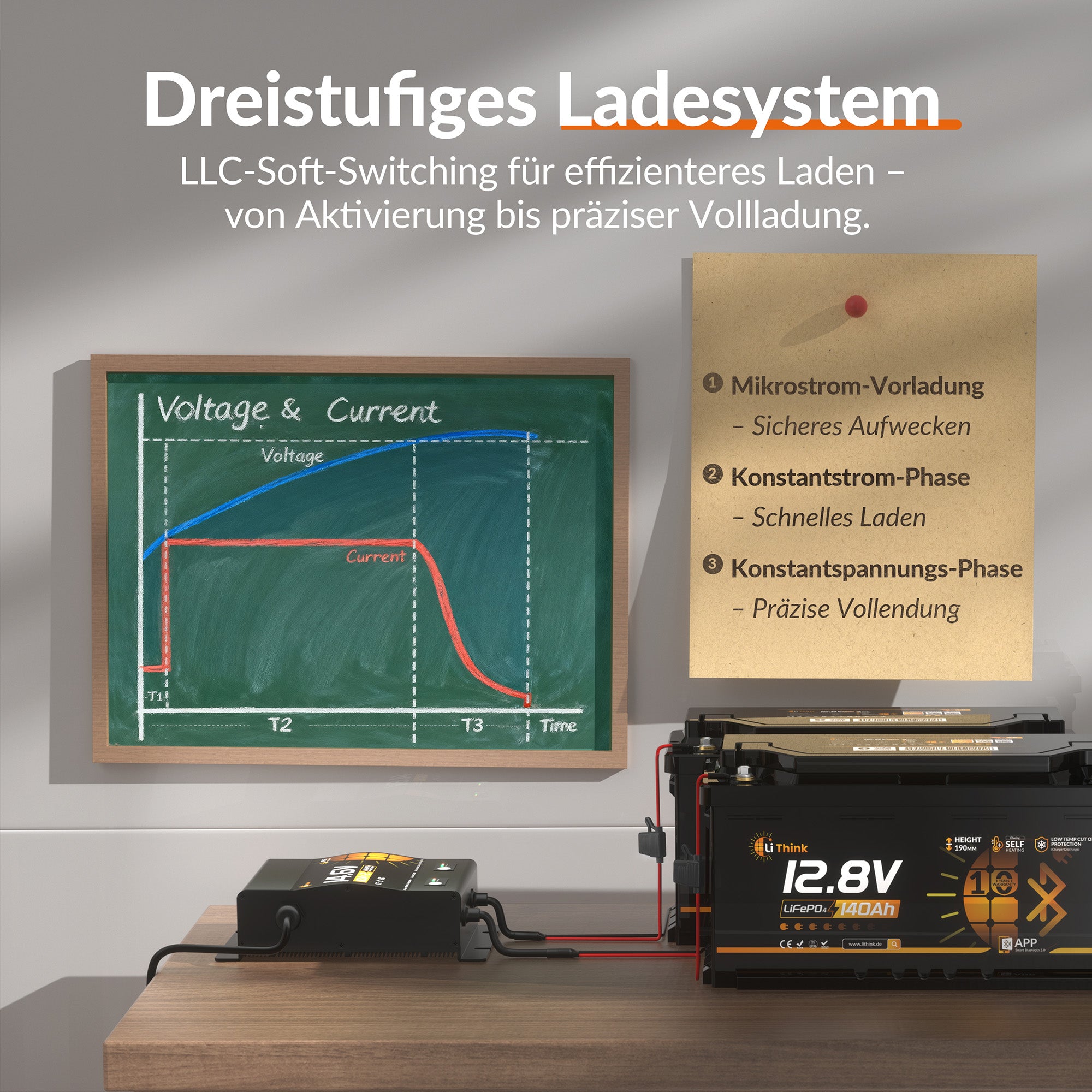
  • 0 V Activation

    Reactivates the BMS automatically.

  • CC Fast Charging

    High-Speed Charging up to 90%.

  • CV Saturation

    Stable 14,6 V for full cells.

  • Car Shutdown

    Stops at 100% – no overcharging.

Dual Charging Power & Safety

5-fold Smart protection system

Charge two batteries simultaneously with independent monitoring. Our advanced safety architecture protects each channel separately from electrical faults – for 100% worry-free operation around the clock.

  • > 14.6 V

    Surge Protection
  • 10 A × 2

    Overcurrent Protection
  • Auto Stop

    Short-circuit protection
  • + / -

    reverse polarity protection
  • ≥ 75 °C

    Overtemperature protection

Universal Compatibility

3 modes. 1 charger.


Why buy a separate device for every battery? Effortlessly switch between LiFePO₄, lead-acid (AGM/GEL) and Li-Ion (NCM). Tailored charging profiles guarantee the perfect voltage for each type.

LiFePO₄ • 14,6 V

SLA / AGM • 14,7 V

NCM Li-Ion • 12,6 V

Robust Design & Smart Features

Built for heavy-duty use: the aluminum-alloy housing provides optimal protection and heat dissipation. With the integrated wall mount and dual charging system, it’s the perfect all-in-one solution for your garage or RV.

Specifications & What's Included

Collapsible row

Use collapsible tabs for more detailed information that will help customers make a purchasing decision.

Ex: Shipping and return policies, size guides, and other common questions.

Included in the package

  • Waterproof

  • Manual (DE/EN)

  • Fuses ×2

FAQs

1. With which LiFePO4 batteries from Lithink is this 14.6V 10A×2 charger with dual output compatible?

This charger was specifically designed for Lithink’s 12.8V lithium iron phosphate batteries. It is compatible with all 12.8V LiFePO4 battery models from Lithink (Lithink currently offers a total of 7 models of these batteries). For example, you can safely charge a Lithink 12.8V 100Ah LiFePO4 battery or any other 12.8V model in the product line with it. The output voltage of 14.6V is precisely matched to the full-charge voltage of a 12.8V LiFePO4 battery, so the battery will be fully charged to 100% without shortening its service life. Using this charger in combination with Lithink batteries ensures optimal charging performance and maximum safety.

2. Are the two charging outputs independent of each other, and can I use only one output to charge a single battery?

Yes. The two charging outputs operate as two completely independent charging units and do not affect each other. Each output can supply up to 10A charging current for a 12.8V battery, and even when both outputs are used simultaneously the performance of the other is not affected. You can easily use only one output to charge a single battery — if the second output is not used, this has no negative impact on the charger. The unused port simply remains inactive while the used port supplies up to 10A charging current to the battery.

3. What should I pay attention to when charging two 12.8V batteries at the same time, and approximately how long does it take to fully charge them?

When charging two 12.8V batteries at the same time, simply connect each battery to one of the two outputs – no special settings are required, as the charger manages each battery independently. It is optimal if both batteries are of a similar type and capacity, but even if they are not, the device will charge each one separately. If both batteries have comparable capacity and the same state of charge, they will become fully charged at about the same time. Once one battery is full, the corresponding charging port stops automatically (the indicator switches to Ready), while the second output continues charging the other battery until it is fully charged. The charging time depends on the batteries’ capacity and their initial state of charge. For example, it takes about 10–11 hours to charge a 12.8V 100Ah LiFePO4 battery from nearly empty to 100% with this 10A charger. If you charge two such 100Ah batteries simultaneously, each battery also takes about 10 hours, so both are full in roughly 10 hours (which is about half the time compared to charging them sequentially). Batteries with lower capacity (e.g., 50Ah) charge correspondingly faster – about 5–6 hours – and partially discharged batteries shorten the charging time accordingly.

4. Does the charger stop automatically once the battery is full, and is it safe to leave the battery connected overnight?

Yes. This smart charger automatically stops charging once it detects the battery is full (so when approximately 14,6V is reached and the charging current has dropped to nearly zero). It uses a three-stage constant-current/constant-voltage charging algorithm: as the battery voltage approaches full charge, the charger switches to constant-voltage mode and gradually reduces the current. When the battery is 100% charged, the unit cuts off the current flow; the indicator light typically changes from red to green to show that charging is complete. Thanks to this automatic shut-off feature, you can leave the battery connected overnight or for extended periods without worrying about overcharging — the charger will not continue to supply current to a full battery and therefore will not damage it. In addition, the unit has a battery reactivation function: if the battery has been shut down by the BMS due to deep discharge (0V at the terminals), the charger detects this and supplies a small current to “wake” the battery so that normal charging can resume within a few seconds. The charger’s intelligent charge management combined with the Lithink battery’s BMS protection makes unattended continuous charging safe and reliable.

5. What protection features does this charger have?

The charger offers several safety features: short-circuit protection (automatically shuts off if the output terminals are accidentally shorted), reverse-polarity protection (if the positive/negative poles are swapped, the device will not start charging at all to prevent damage), overheating protection (reduces the charging current or stops charging if the internal temperature becomes too high) and overvoltage protection (ensures the output voltage does not exceed 14,6V to protect the battery from overcharging). These comprehensive safety measures prevent damage to the charger or the battery in the event of incorrect connections, technical faults or adverse environmental conditions, thereby significantly increasing operational safety.