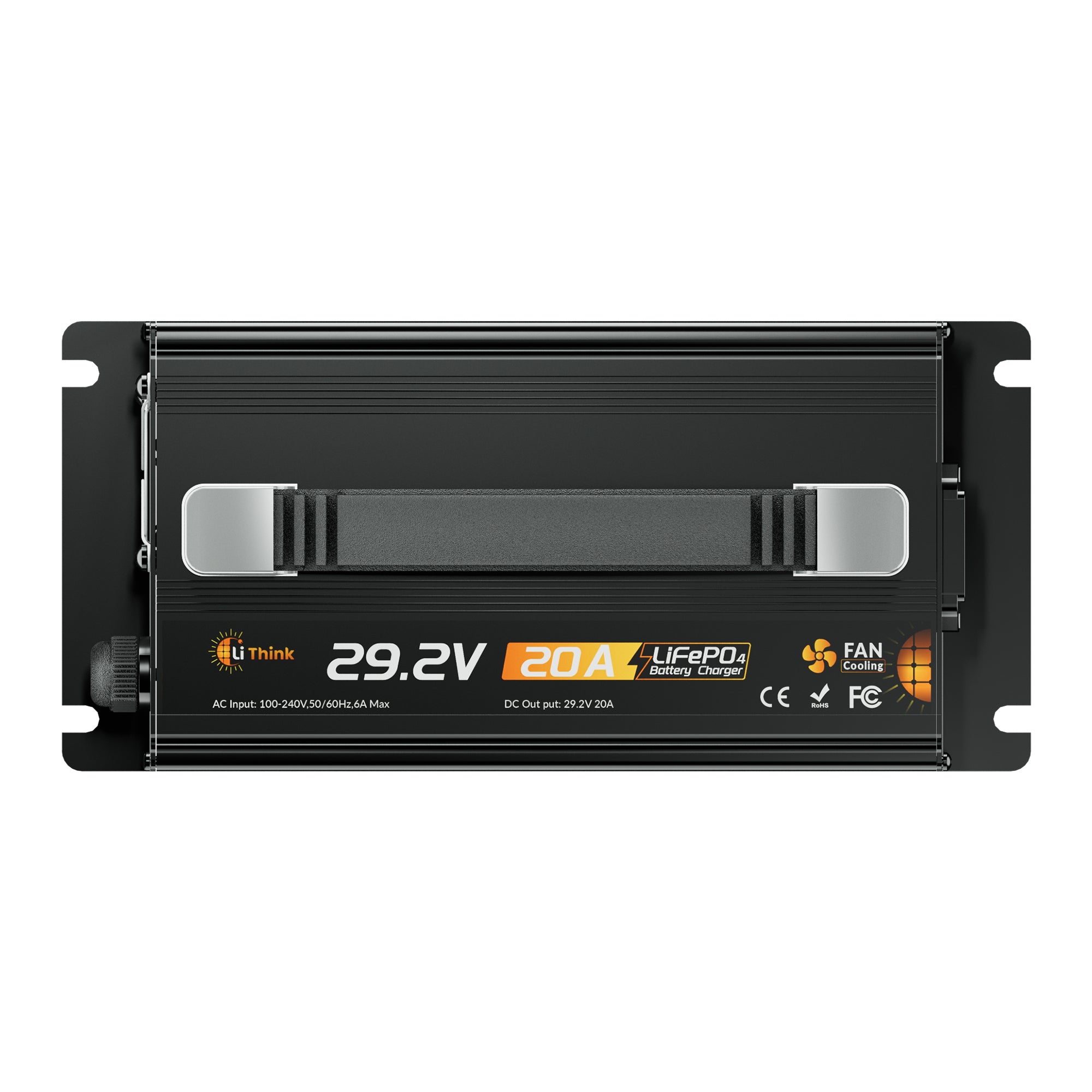
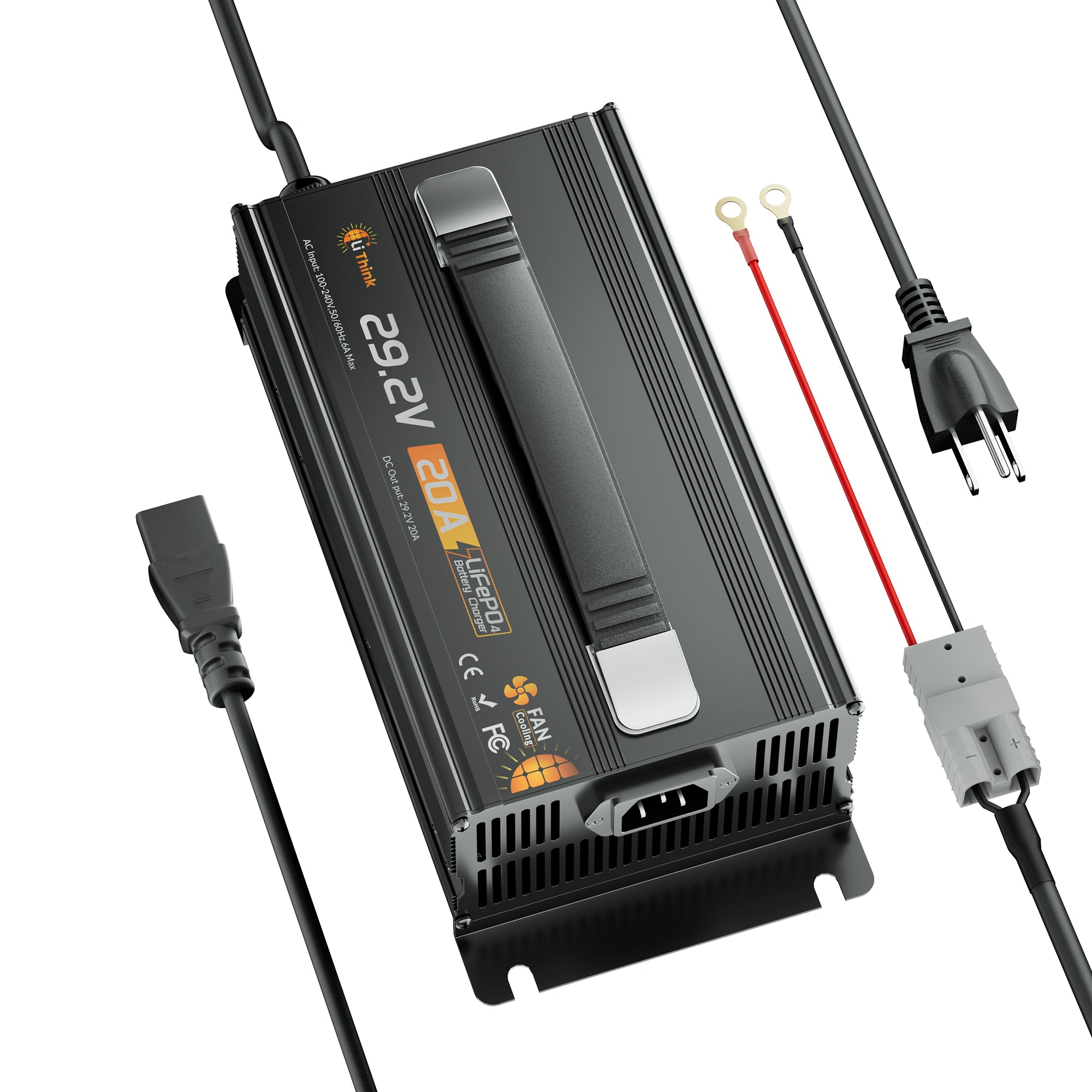
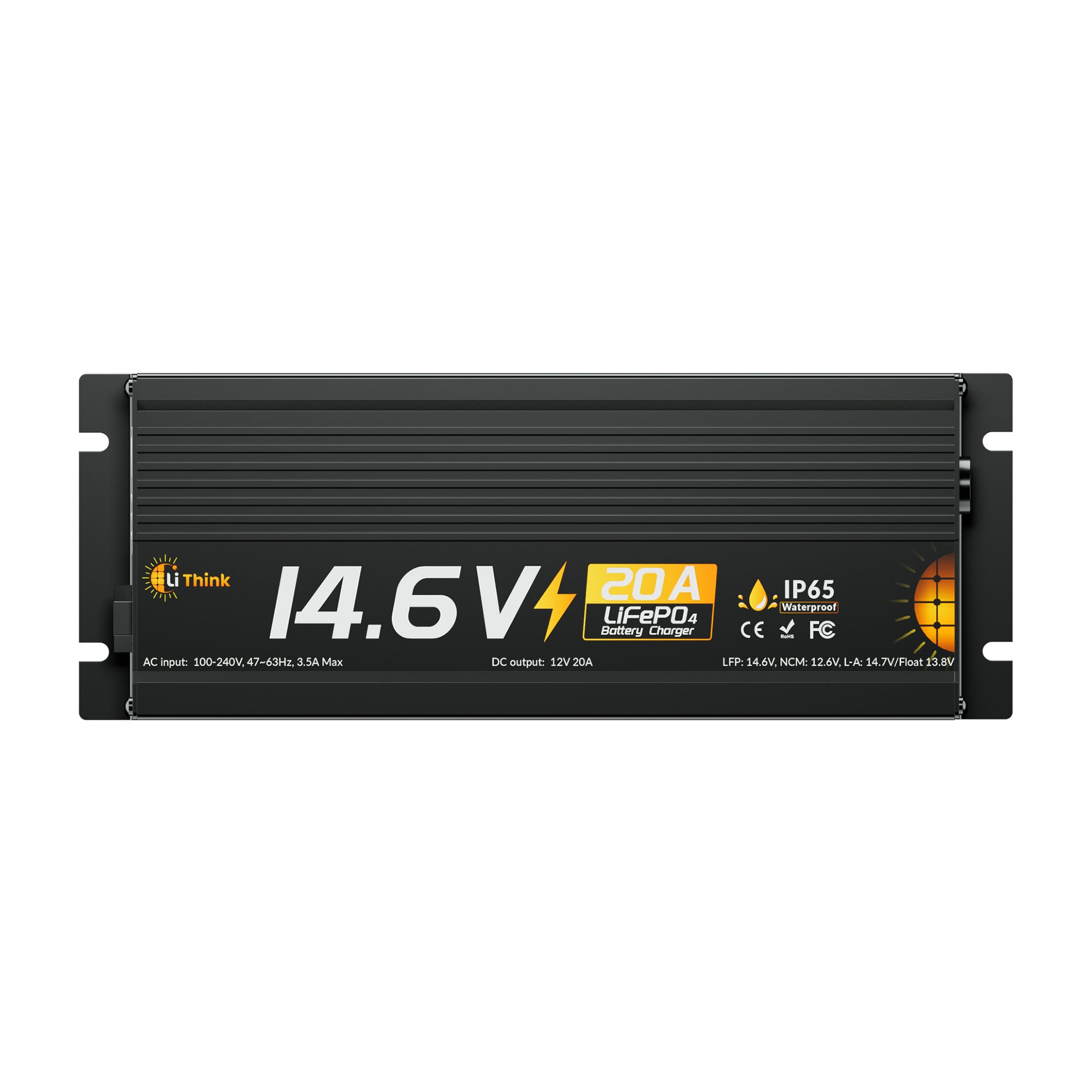
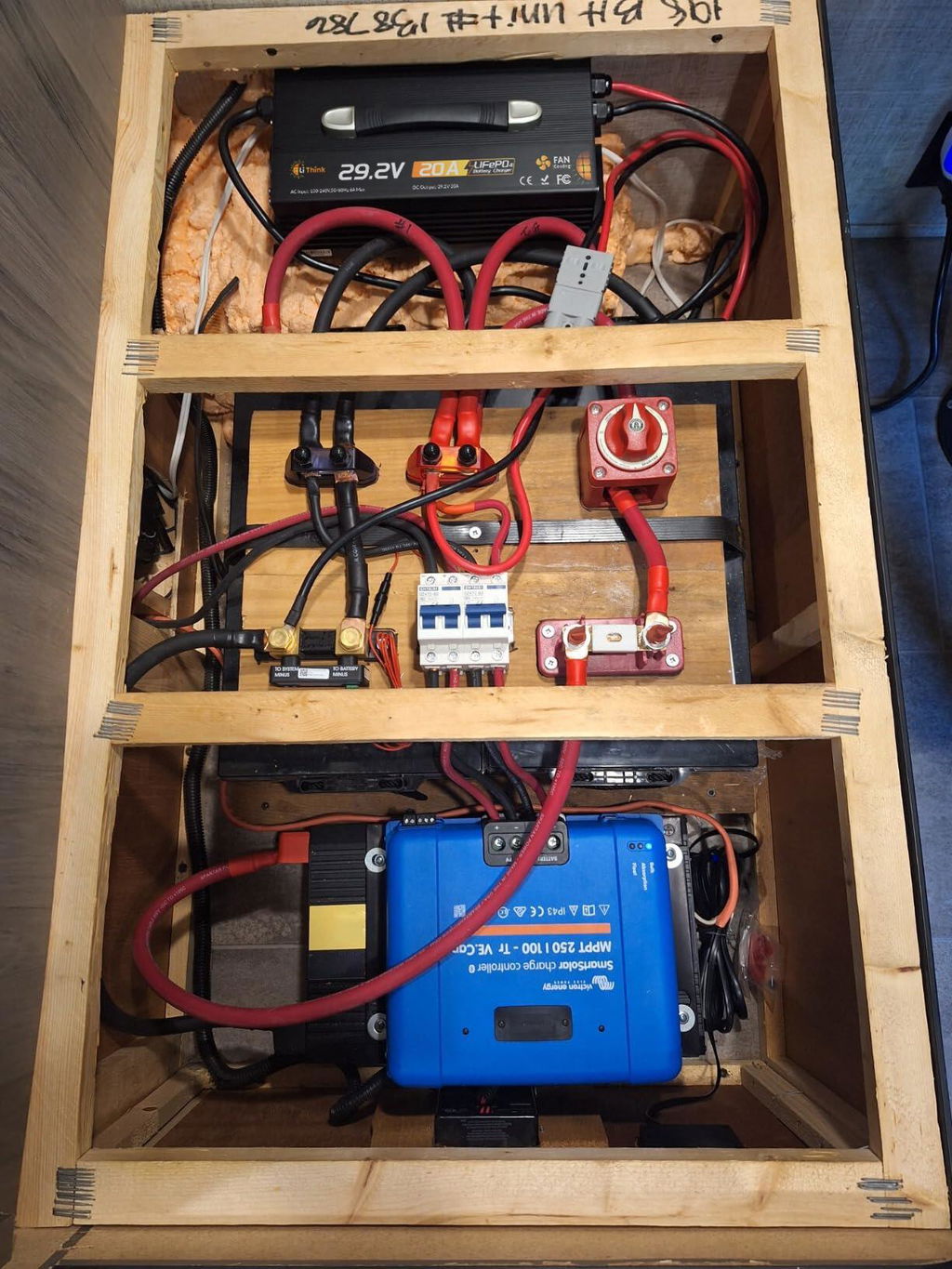
29.2V 20A Active Fan

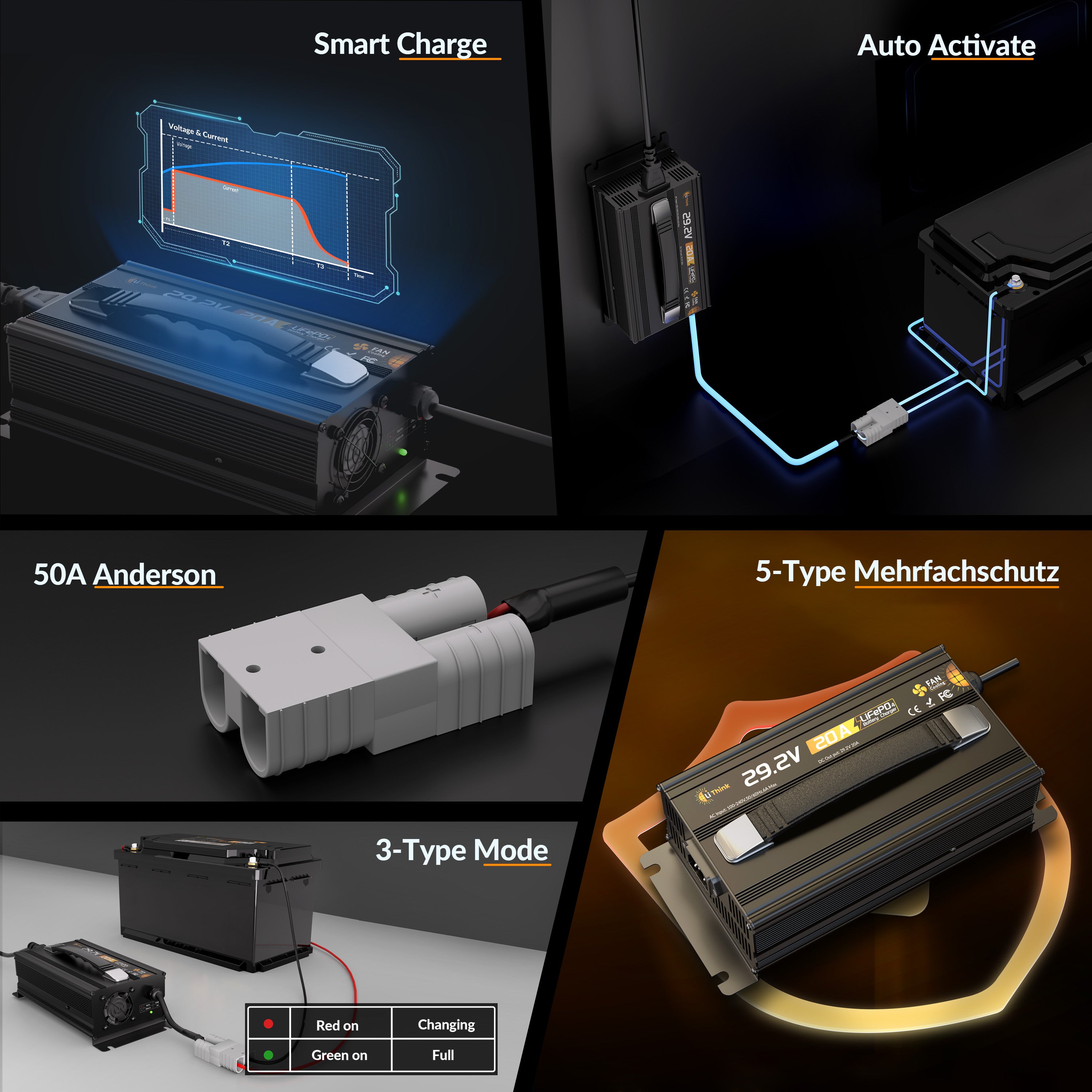
  • 0 V Activation

    Automatically reactivates the BMS.

  • CC Fast Charging

    High-speed charging up to 90%.

  • CV Saturation

    Stable 29,2 V for fully charged cells.

  • Car Shutdown

    Stops at 100% – no overcharging.

Industrial Safety Standard

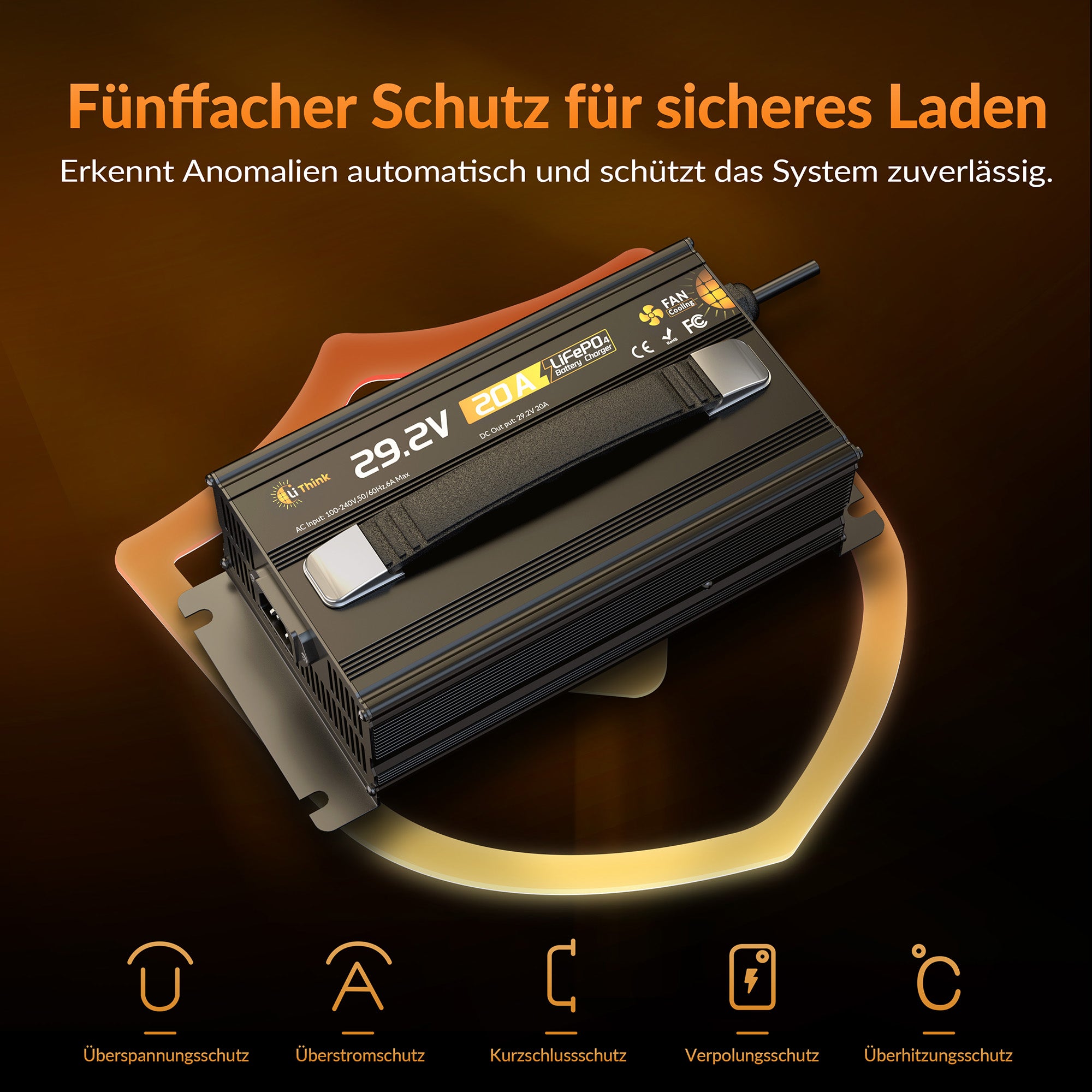
5-fold smart protection system. 100 % safe

High performance requires maximum safety. Our system monitors voltage and temperature on a millisecond basis. It acts like a firewall between the mains and your 24V battery – for completely worry-free, unattended operation.

  • > 29.2 V

    Surge protection
  • 20 A

    Overcurrent protection
  • Automatic Stop

    Short-circuit protection
  • + / -

    Reverse-Polarity Protection
  • ≥ 75 °C

    Overtemperature protection

Robust Design & Maximum Efficiency

Designed for high continuous performance. The housing made of an anodized aluminum alloy not only protects the electronics from shocks but also serves as a massive heat sink for the 584 W Power. With the integrated carrying handle and wall mount, it is the flexible solution for your workshop or garage.

Specifications & Scope of Delivery

Collapsible row

Use collapsible tabs for more detailed information that will help customers make a purchasing decision.

Ex: Shipping and return policies, size guides, and other common questions.

Included in delivery

  • Waterproof

  • Manual (DE/EN)

  • Anderson connector cable

FAQs

1. For which Lithink LiFePO4 batteries is this 29,2V 20A charger suitable?

Dieses 29,2V 20A Ladegerät wurde speziell für 25.6V (Nennspannung 25,6V) Lithium-Eisenphosphat-Batterien entwickelt. Es ist mit allen 25.6V LiFePO4-Batteriemodellen von Lithink kompatibel (zum Beispiel der Lithink 25.6V 100Ah LiFePO4-Batterie). Die Ausgangsspannung von bis zu 29,2V ist genau auf die Anforderungen eines 25.6V LiFePO4-Batteriepakets abgestimmt und ermöglicht es, die Batterie vollständig bis auf 100% zu laden. Das Ladegerät ist die ideale Ergänzung zu den 25.6V LiFePO4-Batterien von Lithink und sorgt für einen effizienten und sicheren Ladeprozess. Bitte beachten Sie, dass dieses Ladegerät ausschließlich für 25.6V (8-zellige) LiFePO4-Batterien ausgelegt ist und nicht zum Laden von 12.8V-Batterien verwendet werden darf (für 12.8V-Batterien nutzen Sie bitte ein 14,6V-Ladegerät).

2. Is the charging current of 20A suitable for my battery? Is this current too high or too low?

A charging current of 20A is suitable and efficient for most 25.6V LiFePO4 batteries. For example, 20A on a Lithink 25.6V 100Ah battery corresponds to a charge rate of about 0.2C, allowing the battery to be fully charged in roughly 5 hours — a fast charging process that still remains well within safe limits and does not overly stress the battery. For a smaller 25.6V battery (around 50Ah), 20A is approximately 0.4C; such a current can typically be handled safely by the LiFePO4 cells and the BMS, so this battery will be fully charged in about 2–3 hours. For a larger battery (e.g., 150Ah or 200Ah), 20A represents an even lower relative charge current (<0.15C), which is a very gentle charging regime (however, it will of course take longer to reach full charge at higher capacities). In summary, a charging current of 20A — whether your battery is relatively small or very large — is a moderate, safe value that won’t damage the battery and will recharge it in a reasonable amount of time.

3. How long does it take approximately to fully charge a 25.6V battery with this charger?

Charging time depends on the battery's capacity and its initial state of charge. For example, a typical 25.6V 100Ah LiFePO4 battery takes about 5–6 hours to charge from nearly empty to 100% with this 20A charger. A smaller 25.6V 50Ah battery would be fully charged in approximately 2.5–3 hours. If the battery is only partially discharged (say at 50%), the charging time is reduced accordingly (in this case to about half). Note that during the final charging stage (constant-voltage phase), the last few percent to full charge can take an additional 30–60 minutes. Overall, this 20A charger can significantly reduce charging time compared to weaker chargers and allows you to recharge your 25.6V battery much more quickly.

4. Does the charger automatically switch off when fully charged, and is it safe to leave it connected for a long time (e.g., overnight)?

Yes, it does. This charger automatically stops charging once it detects that your 25.6V LiFePO4 battery is fully charged (for example when about 29.2V is reached and the charging current has dropped to nearly zero). It features an intelligent charge control: when the battery approaches full, the charger switches to a constant-voltage phase with low current to gently complete the charge. When the battery is 100% charged, the charger cuts off the power completely and the status indicator typically turns green, indicating that charging is finished. Thanks to this automatic shutoff, you can safely leave the battery connected to the charger for extended periods (e.g., overnight) without worrying about overcharging — the charger will not force current into a full battery, so the battery will not be damaged. If your battery has been put into protection mode by the BMS due to deep discharge (i.e., the battery shows 0V), the charger also has an activation function: it supplies a small current to wake the "sleeping" battery so that normal charging can resume within a few seconds. The device’s intelligent charge management combined with the integrated BMS protection of the Lithink battery also makes unattended long-term charging safe and reliable.

5. What safety features does this charger have?

The charger includes multiple safety features: short-circuit protection (if the output terminals are accidentally shorted, the device switches off automatically), reverse-polarity protection (if the polarity is reversed the charger will not start, preventing damage), overheat protection (if the internal temperature becomes too high the device will automatically reduce or interrupt the charging process), and output overvoltage protection (ensures the charging voltage does not exceed 29,2V to protect the battery from overcharging). These comprehensive protection features prevent charging accidents caused by incorrect connections, technical faults, or adverse environmental conditions and ensure the charging process is very safe.